
600 kW Central Heating & Cooling System for Calendering Lines
Customer: Global Tire & Rubber Manufacturer production plant in Mexico
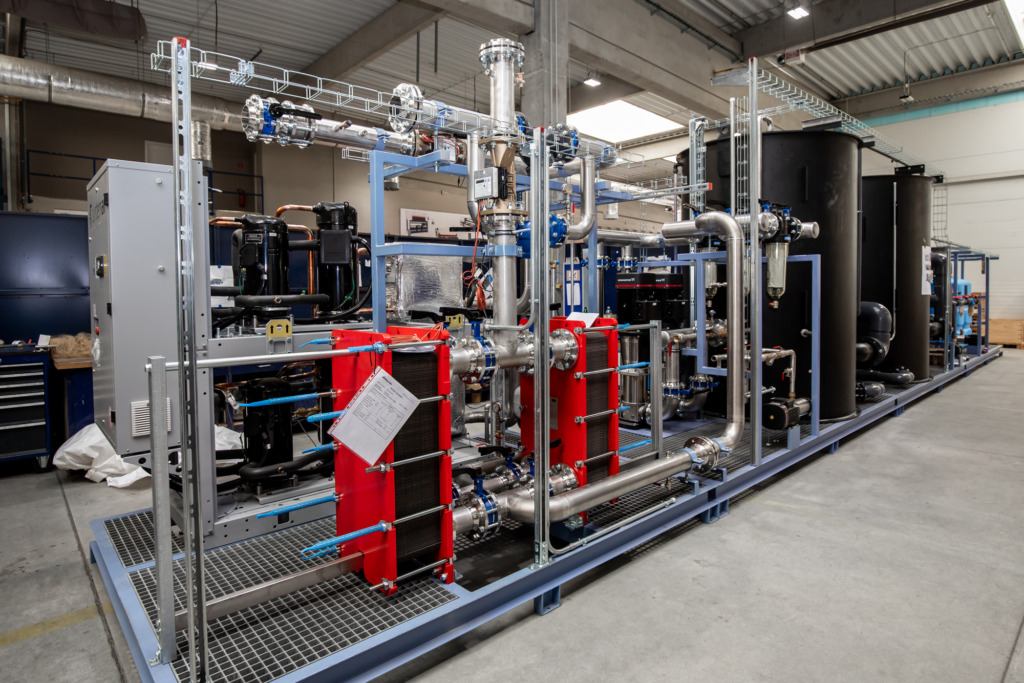
IPECON developed a completely new generation of centralized multi-zone Temperature Control System concept for Calendering Lines, boasting a total electric heating capacity of 600 kW. The solution brings together a central heating and cooling system, a shared hot water storage tank, waste heat recovery, and proprietary control software for powerful collection and analysis of operational data.
Key innovations include:
- a next-generation central heating concept that optimizes the use of installed capacity,
- seamless integration with alternative heat sources,
- smart energy recovery from cooled zones,
- an intelligent monitoring system for tracking and evaluating energy consumption,
- a design built to meet the US UL508A standard
From Conventional TCU to Integrated Platform
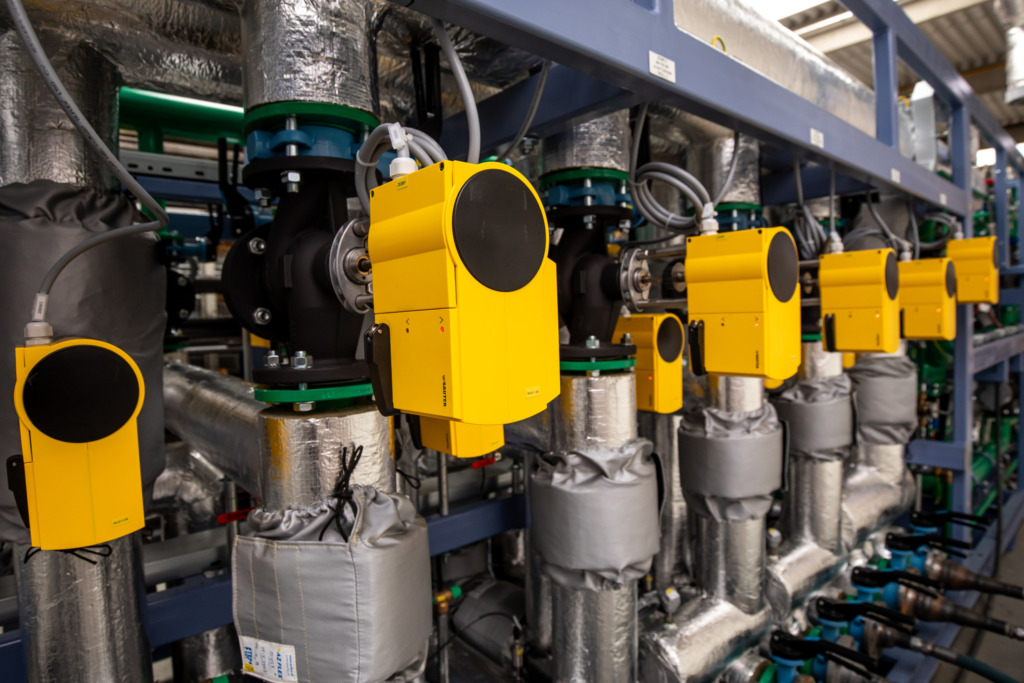
The customer required a next-generation temperature control platform for a high-performance rubber calender line, combining high heating capacity, improved energy efficiency, and full compliance with North American electrical standards. Rather than a conventional TCU, the project called for an entirely new system integrating centralized heating, cooling, hydraulic distribution and intelligent process control into one coordinated platform.
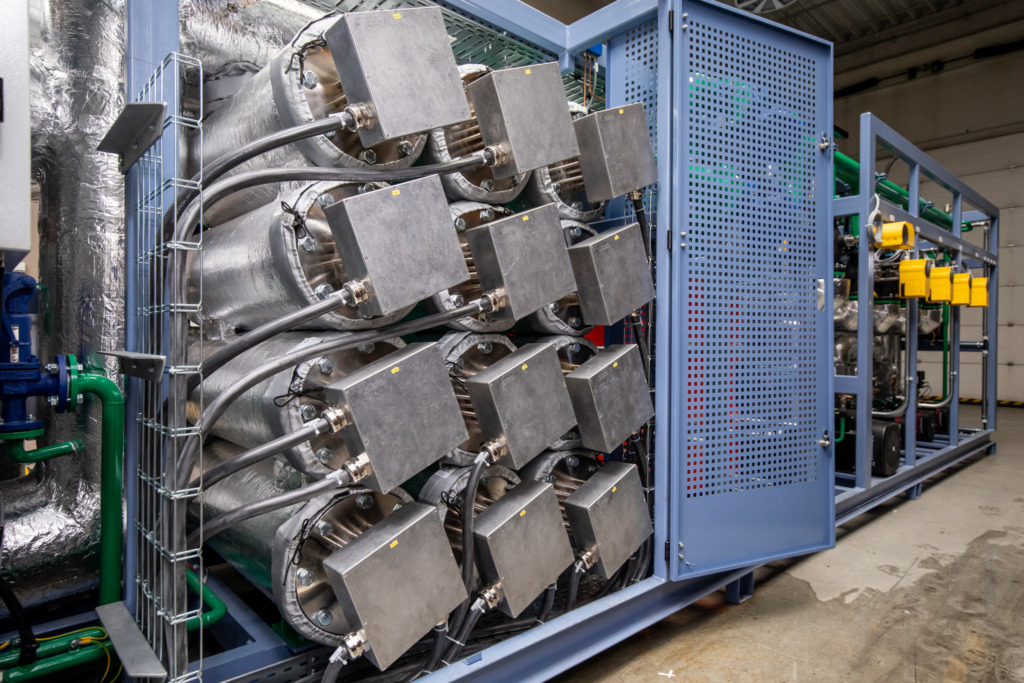
Engineering Behind the Innovation
Unlike conventional TCUs, the system integrates multiple thermal subsystems into a single intelligent platform capable of dynamically distributing heating and cooling capacity according to real process demand.
The core innovation is a central heating architecture where the effective system heating capacity exceeds the sum of simultaneously installed heating circuits. By combining a shared hot-water reservoir, optimized hydraulic distribution and proprietary control algorithms, thermal energy can be transferred efficiently between multiple process zones.
The system also incorporates waste heat recovery, allowing thermal energy removed from cooling circuits to be reused for heating other zones, significantly reducing overall energy consumption.
To maximize long-term flexibility, the heating system was designed to allow future integration of alternative heat sources without fundamental modifications to the process architecture.
Proprietary IPECON software continuously monitors temperatures, energy consumption and process media, providing long-term data collection, diagnostics and performance analysis for predictive maintenance and process optimization.
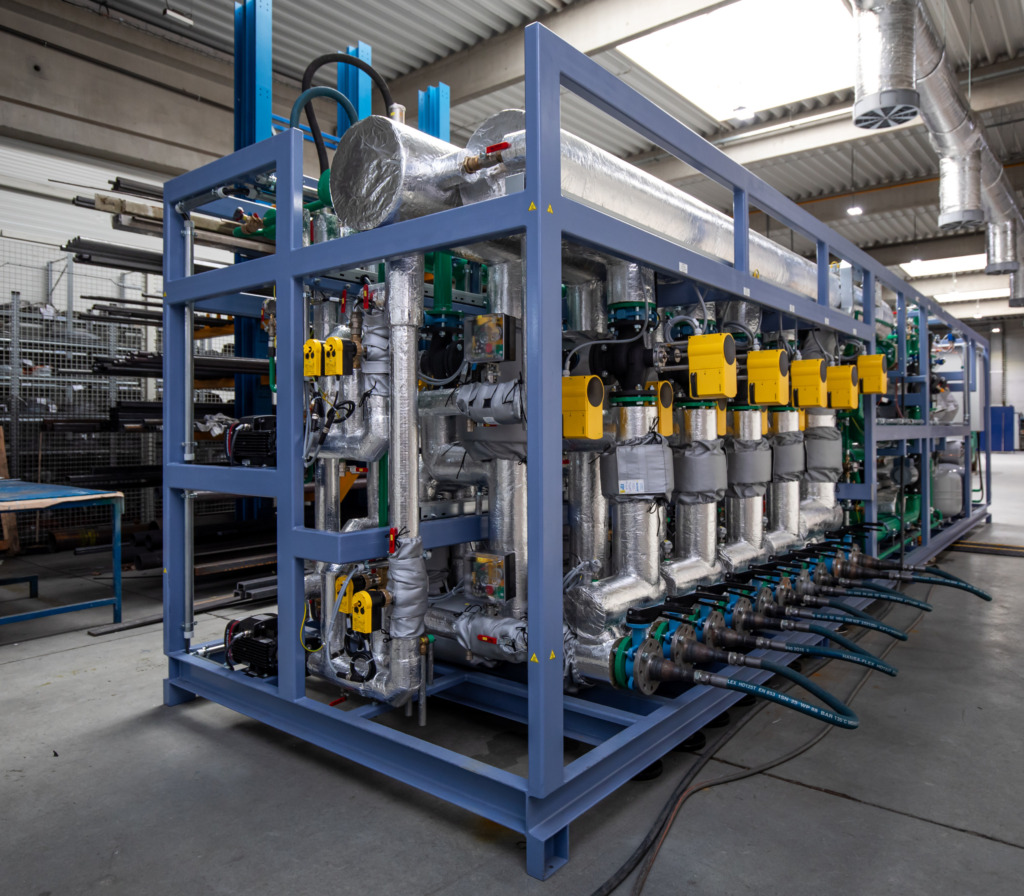
Developing an entirely new thermal platform required solving several complex engineering challenges.
Advanced Hydraulic Architecture
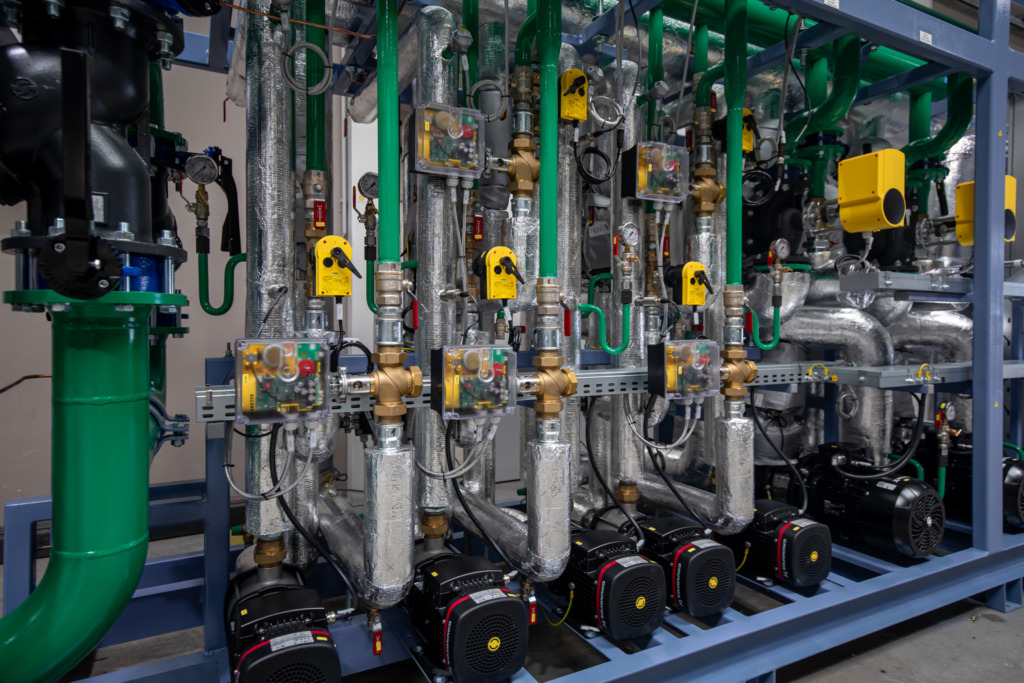
A completely new hydraulic system was designed around a common heated-water reservoir. This required developing an original hydraulic distribution concept together with precise sizing of pumps, control valves, piping networks and heat exchangers to ensure stable temperature control across multiple independent process zones.
High-Power Electrical Engineering
Achieving 600 kW heating capacity while complying with UL508A demanded a completely new electrical design, including:
- Class J fuse protection for short-circuit current limitation
- integration of 750 kcmil (380 mm²) power conductors
- flexible laminated busbars (Flexibar) for top-entry power distribution
- high-power Y/Δ switching of heating elements without semiconductor switching devices
Mechanical Design & Serviceability
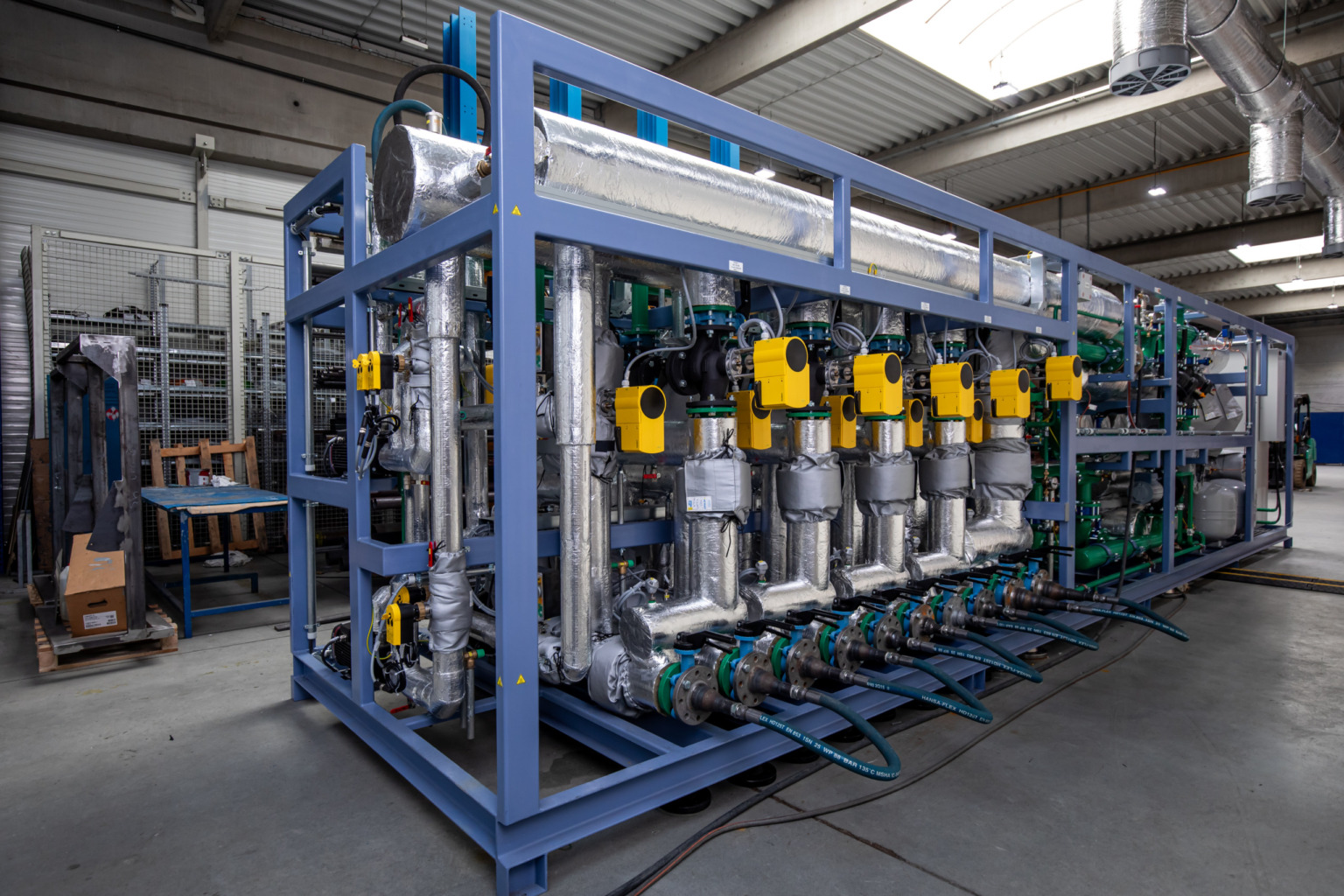
Despite its size and performance, the complete system had to fit within standard ocean freight container dimensions for shipment to the client’s production facility in Mexico, while maintaining unrestricted access for maintenance, inspection and replacement of pumps, valves, sensors and other critical components.
Technical Highlights
- Centralized heating and cooling architecture
- 600 kW installed heating capacity
- Shared hot-water storage for optimized energy distribution
- Heat recovery between process zones
- Proprietary IPECON control software
- Advanced hydraulic balancing
- Intelligent energy management
- Modular architecture prepared for future expansion
- Designed for continuous 24/7 industrial operation
- Full UL508A compliance
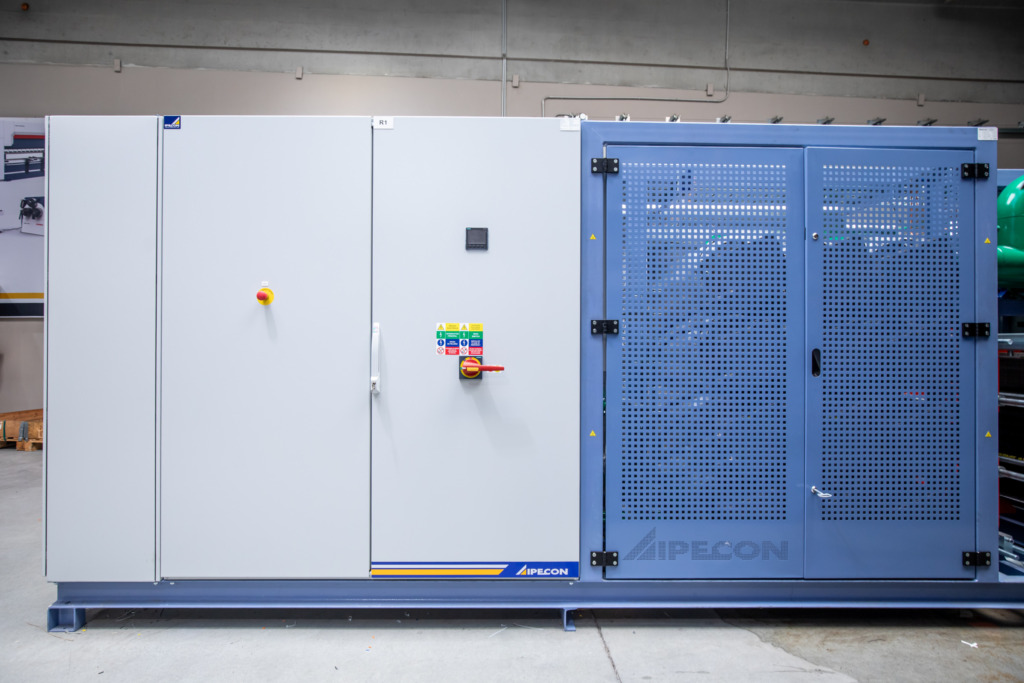
Results & Benefits
The new platform delivers measurable technical and operational advantages compared to conventional temperature control systems.
The centralized heating concept significantly reduces installed electrical power requirements while improving overall thermal efficiency. Heat recovery minimizes wasted energy and lowers operating costs, while intelligent process control ensures stable temperatures across all production zones.
Critical components, including heat exchangers, are fully redundant, increasing system availability and minimizing production downtime. The modular design simplifies maintenance and supports predictive service strategies through continuous operational monitoring.
Although developed specifically for a rubber calendering line, the platform is readily adaptable for extrusion lines, rubber mixers and other industrial processes requiring high-capacity multi-zone temperature control.